
Learning To Be Still

Share

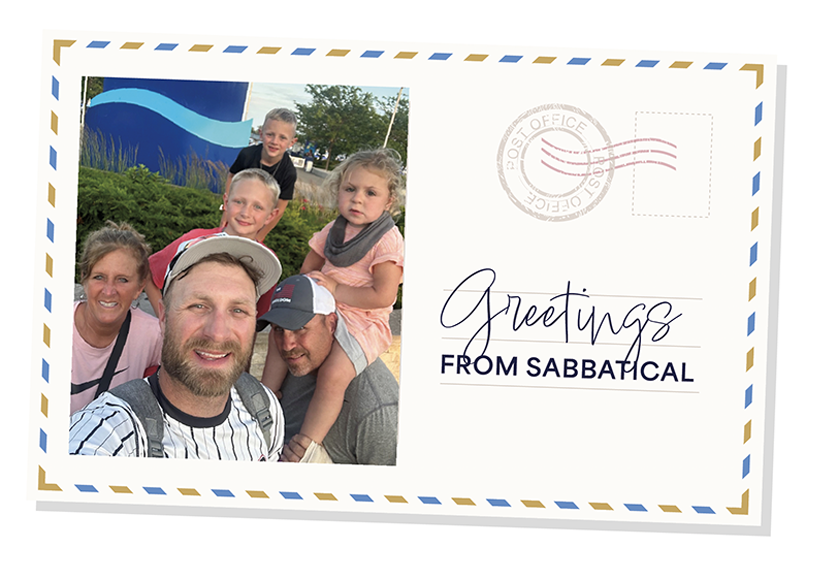
A sabbatical scholarship from LCEF helped one church worker rediscover how to rest.
How many times have you heard your church request volunteer support to keep your ministry work moving? The number of announcements and bulletin ads may feel as endless as the ministry work itself is in reality. There’s usually more work to do than paid staff can reasonably cover.
Then, if there is a volunteer gap, church workers typically cover the need on their own—on top of their primary role and outside of normal work hours (which often include weekends anyway). For church workers, this is often due to their commitment to mission over money.
 Sabbaticals are good for everyone
Grace Place Wellness offers multiple sabbatical scholarships each year to called LCMS church workers valued at up to $7,500 each year.
Burnout is a common term to define the aftermath of an overworked soul, which sometimes becomes part of an unfortunate ministry reality: a gaping hole in the needs of the ministry.
Sabbatical scholarship recipient Stephanie Genske shares how taking a sabbatical changed her approach to her work as both childcare director and children’s ministry director at Trinity Lutheran Church in Waconia, Minnesota—as well as how her renewal benefitted the ministry she serves.
Before your sabbatical, what did a typical week look like? Would you have said you needed a sabbatical?
Stephanie Genske: My life before sabbatical was just all go, go, go. Both of my roles are potentially full-time jobs on their own, and on top of that, I work at the hospital nearby on my day off. Then when we layer in time with the grandkids wherever possible, I didn’t know how to be still. I think I’m a lot like my mom—she’s in her mid-80s and she’s still working full time. And, like other ministry workers, I found it easy to rationalize overwork. I would say to myself, “I’m doing these things for the Lord … my needs can take a back seat.”
So, of course, no: I did not think a sabbatical was for me.
“A sabbatical is a gift … and it’s not just for pastors.”
—Stephanie Genske
It sounds like slowing down didn’t come naturally for you. How did you change your practice and what did you discover during that process?
SG: During my sabbatical, I was so worked up that I was about to waste this time. I felt that I needed to still do enough to justify being the recipient of this gift from my church and Grace Place Wellness. Because of that anxiety, I went into the sabbatical with four pages of tasks I wanted to accomplish before coming back. Starting a journal helped me let go of my to-do list. I used a Dayenu-style journal, and it helped me stay grateful for all that had happened without stressing over what I hadn’t gotten done.
I also ended up seeing a counselor soon after my sabbatical began, and it was so helpful. He reminded me that I couldn’t just flip a switch and become a new person overnight.
When you came back after the sabbatical, what was different?
SG: I jumped right into Vacation Bible School week, of course! That involves some long days and long nights, but all of my dread about going to work each day was gone.
Beyond that, the sabbatical gave me the courage to advocate for change. I gained the perspective I needed to have a workload conversation with our pastor and board of elders. Since it took eight people to cover my responsibilities while I was away, the reality of my workload was clear to them, too. It helped reframe conversations about my role.
The ministry mission and my place in it didn’t change—I did.
What would you say to a church worker who wants to try a sabbatical but doesn’t know where to start?
SG: A sabbatical is a gift … and it’s not just for pastors. Do it to refresh and reenergize your commitment to what you love—and don’t feel guilty when you walk away. When you come back, everything will be there: the job, the people and the ministry. You’ll just be able to see the mission with new eyes again.
Find sabbatical resources at lcef.org/BeStill.

