
Reimagining a Campus Beyond Repairs

Share
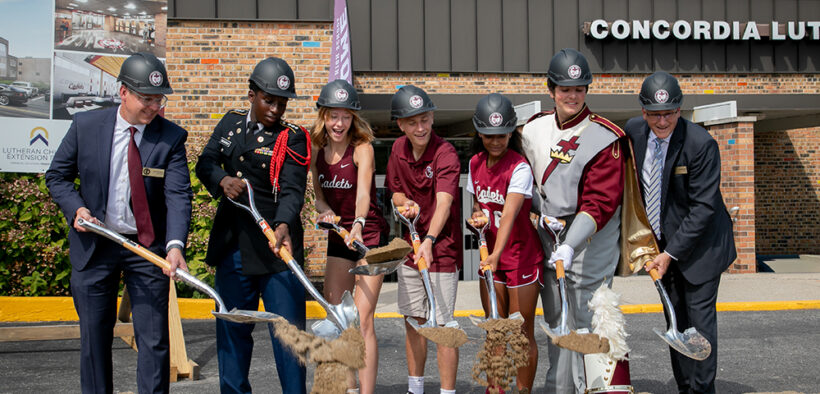
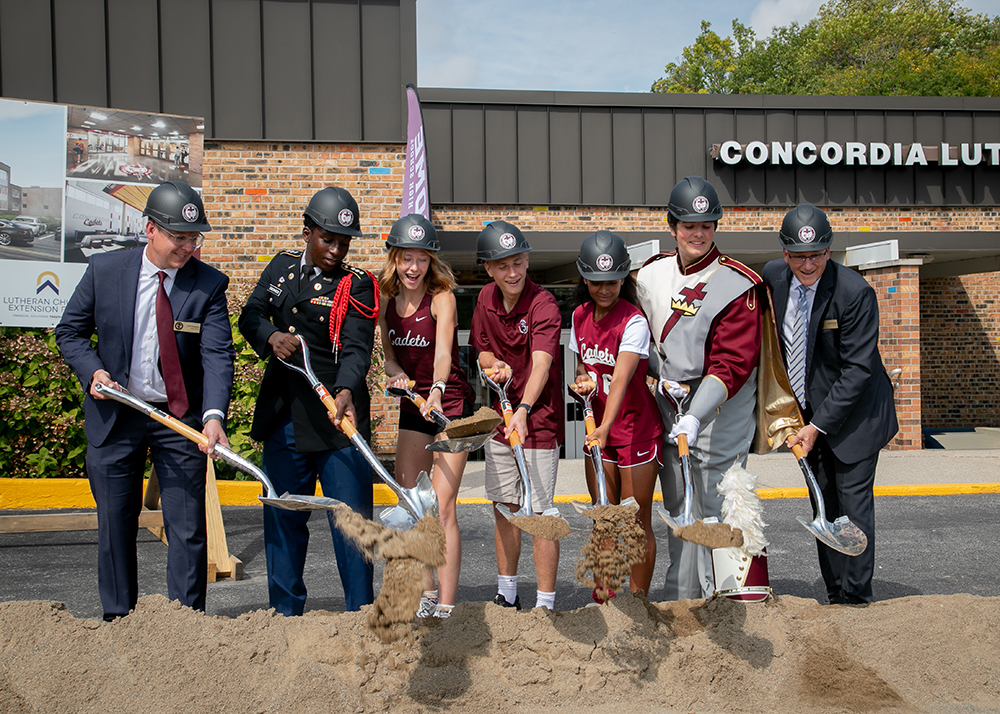
When the walls came apart at Concordia Lutheran High School, LCEF pulled together a new vision for the school.
The weight of long-term use was finally showing on the building at Concordia Lutheran High School (CLHS) in Fort Wayne, Indiana. Despite continued maintenance, the walls in one part of the 1960s-era building were coming apart—literally.
The school’s curtain walls had begun to separate from the building. By 2021, CLHS had become what many called a “well-loved” school.
Jacob Pennekamp, head of school at CLHS, was at the helm of this aging ministry building. He said, “It’s not that it wasn’t taken care of … it’s just that you get to a point where the boiler finally has to be replaced. Finally, the roof has to be replaced. Finally, the curtain wall system fails.”
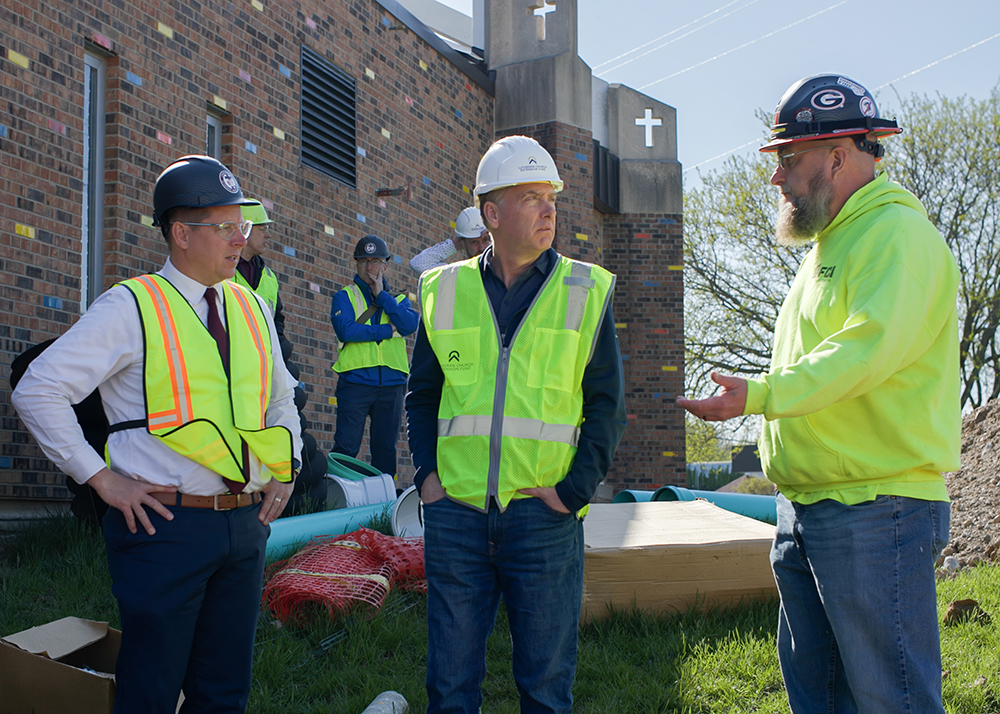
Then Bart Day, president and CEO at Lutheran Church Extension Fund (LCEF), walked the campus. He listened to Pennekamp’s honest assessment of the CLHS campus and his review of what he had been doing to help the school move beyond its maintenance obstacles.
After hearing the full story, Day told Pennekamp, “I have an idea.”
 SnapShot
THE SITUATION
The deferred maintenance of an aging 1960s campus at Concordia Lutheran High School (CLHS) reached a breaking point—literally..
THE TRANSFORMATION
LCEF supported CLHS through reframing the situation from “just fix what’s broken” to “build what comes next.”
THE IMPACT
CLHS is building beyond basic repairs into a campus that supports their high-quality education and integral community reputation
“These deferred maintenance issues were becoming very tenuous … will the building heat? If there’s a torrential rain, are we going to have water infiltration?”
—Jacob Pennekamp
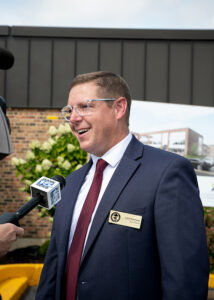
Jacob Pennekamp, head of school at Concordia Lutheran High School, speaks to a news outlet on the day of the groundbreaking ceremony.
Splitting walls were just the beginning
Just a few months before his conversation with Day, Pennekamp became head of school at CLHS. As an alum himself, he was deeply invested in the wellbeing of the school he had begun to lead. He knew that the school had some deferred maintenance needs—he just didn’t know how urgent the issue had become. He recalled, “These deferred maintenance issues were becoming very tenuous … will the building heat? If there’s a torrential rain, are we going to have water infiltration?”
In other words, by that point, the potential for the CLHS campus to safely accommodate students—let alone set them up for the academic excellence for which the school is known—was in jeopardy.
Committed to preserving his alma mater, Pennekamp was making plans to help CLHS overcome this obstacle. The school lacked a financial plan as well as a history of successful capital campaigns. There had only been one successful campaign for $5 million, but that happened 30 years ago.
So, when Day toured the CLHS campus, Pennekamp requested support for the school’s vision, financial confidence and a deferred maintenance plan. Day’s solution for CLHS: Tom Campbell, the then-newly hired member of the Real Estate Solutions team at LCEF. CLHS was the ideal candidate for support from Real Estate Solutions because, as Pennekamp stated, “all of the things they had imagined, we needed.”
When Campbell stepped in, he reframed LCEF’s approach to resolving the needs of Concordia Lutheran High School. He asked the team to “approach this from a 50,000-foot view” to solve the problem.


Pivoting from resolving to reimagining
Before going any further, the Real Estate Solutions team began a facilities audit. The primary goal of the audit: uncover exactly what it would take for trusted local contractors just to fix what’s broken. Then, how much would basic fixes cost? The audit indicated that the maintenance needs were deeper than anyone had expected.
As potential costs accumulated, Pennekamp said, “we got to double-digit millions, and we hadn’t even addressed the things that we thought we needed because of the facility. That really became a catalyst for having a vision that was bigger than I really could have imagined.”
Campbell and the Real Estate Solutions team helped CLHS hold a charrette workshop for relevant community members, staff, alumni and more. Together, these stakeholders reviewed project data, discussed solutions and dreamt together about what CLHS could be.
Pennekamp summarized the charrette as “a really powerful experience to bring stakeholders from a variety of perspectives into the room together and say, ‘What makes Concordia…Concordia?’” That resulting definition helped the team decide what to preserve as part of the school’s identity.
FAST FACT: A charrette is an intensive hands-on workshop between a broad cross-section of stakeholders to align values and goals to meet a diverse set of architectural needs.
Crisis to vision to financial planning
The vision was set, and it transcended simple facility fixes. Pennekamp said, “Nothing helps change more than a crisis … But then, to cross the gap of ‘but that’s too big,’ we were able to layer on the potential that maybe there is an opportunity here that we didn’t see before.”
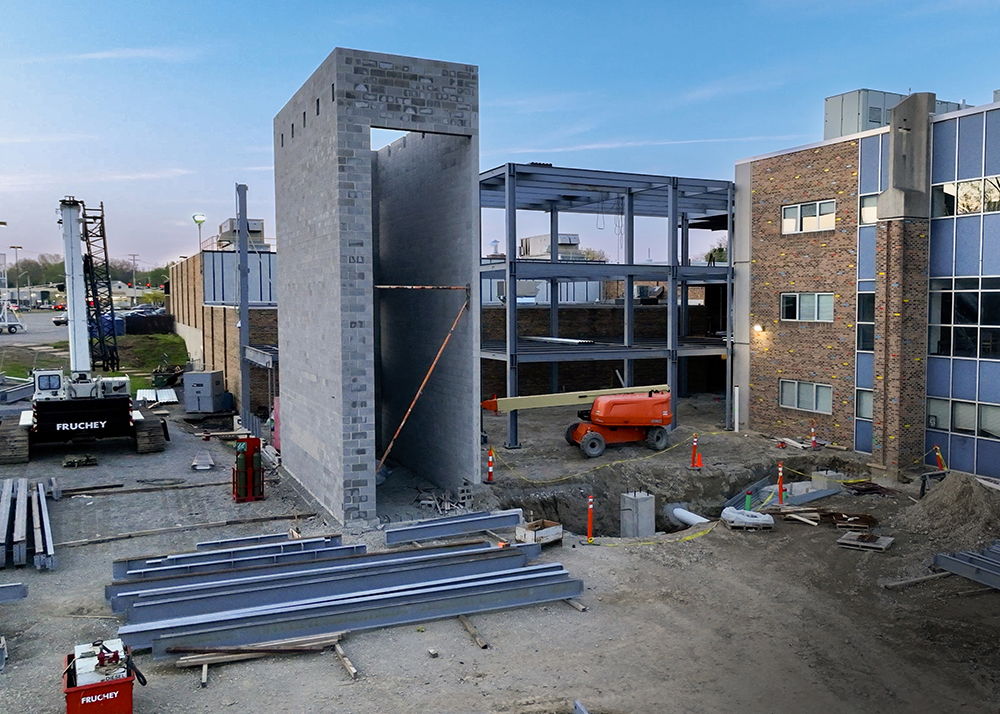
The Real Estate Solutions team walked the campus to find the missing piece of that vision for CLHS. At that time, Campbell said, “Why don’t we just infill between the curtain walls on the two buildings and create a new wonderful space that serves the future students to come? It enhances that space for their programming and their curriculum … creating new space to bring Concordia Lutheran High School up to the 21st century.”
This idea hadn’t yet been considered. However, after a little more collaboration over the idea, it was integrated into a plan to cut ongoing maintenance costs while helping the school thrive for years to come.
Funding the revised vision, however, was altogether another task. The question remained: how could CLHS move from struggling to afford essential repairs to covering the costs of a $50 million project?
That’s when Real Estate Solutions rolled out the next phase: financial planning. CLHS needed a real financial model, best-practice budgeting and future forecasting to prove to leadership that their vision could be driven by goals—not just dreams and promises.
At this stage, the National Lending team at LCEF began teaming up with Real Estate Solutions to support CLHS. Their role: outlining the concrete dollar amounts that would fuel the project at CLHS.
Dan Brown, Senior Vice President of the LCEF National Lending team, was there to sort through those numbers. He told Pennekamp exactly what was happening: “This is full disclosure upfront, walking through your own numbers … poring through them, challenging your assumptions and ultimately coming to what we both think is a reasonable amount of leverage or debt that you can take on and still not put yourselves in harm’s way.”
That’s how lending solutions began for this project—just one component of the funding alongside strong community support.
Community response to commitment and vision
A local organization called The Lutheran Foundation in Fort Wayne told Pennekamp, “We believe in this project, we believe in Concordia, (and) we believe in Lutheran education so much that we’ll be the lead donor for this.” The Lutheran Foundation donated $8 million to get the project started. This lead gift became the springboard for the rest of the campaign.
“Our community wants to see this happen,” Pennekamp said. “They believe in it. People are sacrificially pledging and contributing to it.” The capital campaign for CLHS, named “A Bold Step,” saw donors matching a significant portion of the Lutheran Foundation’s contribution. By September of 2025, donations reached the threshold amount needed to greenlight a groundbreaking as well as the public phase of this campaign.
During the public phase, approximately 20 impact meetings were held between October and Thanksgiving of 2025 at churches, homes and public forums.
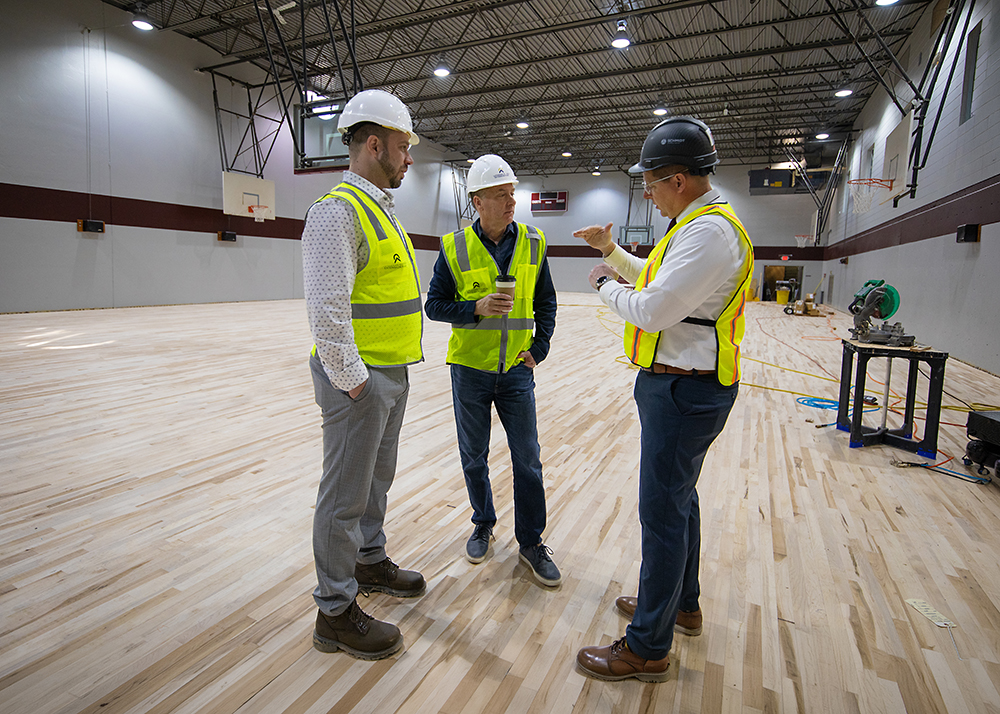
LCEF is helping to fund the campus re-imagination at CLHS through two phases of construction along with a combination of construction and
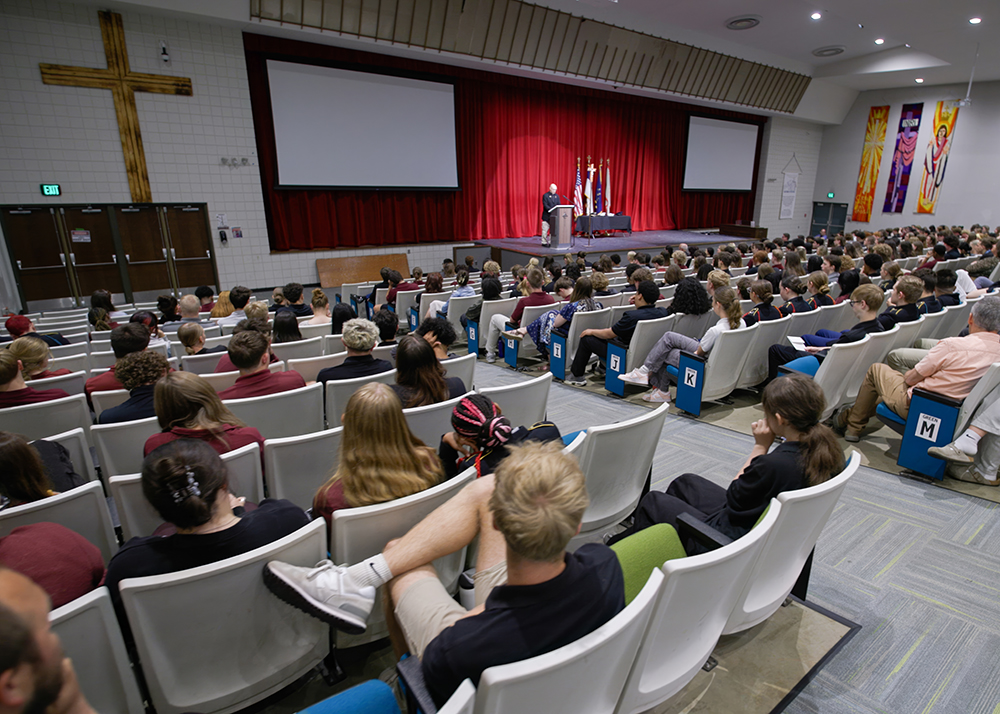
bridge financing. As of June 2026, roughly 84% of their financial goal has been raised, and the 2026 fall campaign is expected to close the funding gap. With Phase 1 of the school renovation well under way, Phase 2—focused on updating the chapel-auditorium—is set to begin. About 8% of the funding goal for this next phase will be covered by a loan through the National Lending team at LCEF.
CLHS: revitalized for the future
“God’s love is immeasurably more,” Pennekamp marveled. “This is immeasurably more than I could have possibly dreamed five years ago.”
CLHS now has a campus that reflects its academic prestige. The school once struggled to preserve their 1960s-era facilities despite walls separating from the building, failing boilers and deteriorated roofing. Now, after consistent partnership through LCEF, they are firmly set to resume their trajectory into a promising future.
Connect with your DVP to bring in LCEF experts for your ministry needs at lcef.org/FindMyDVP.

